
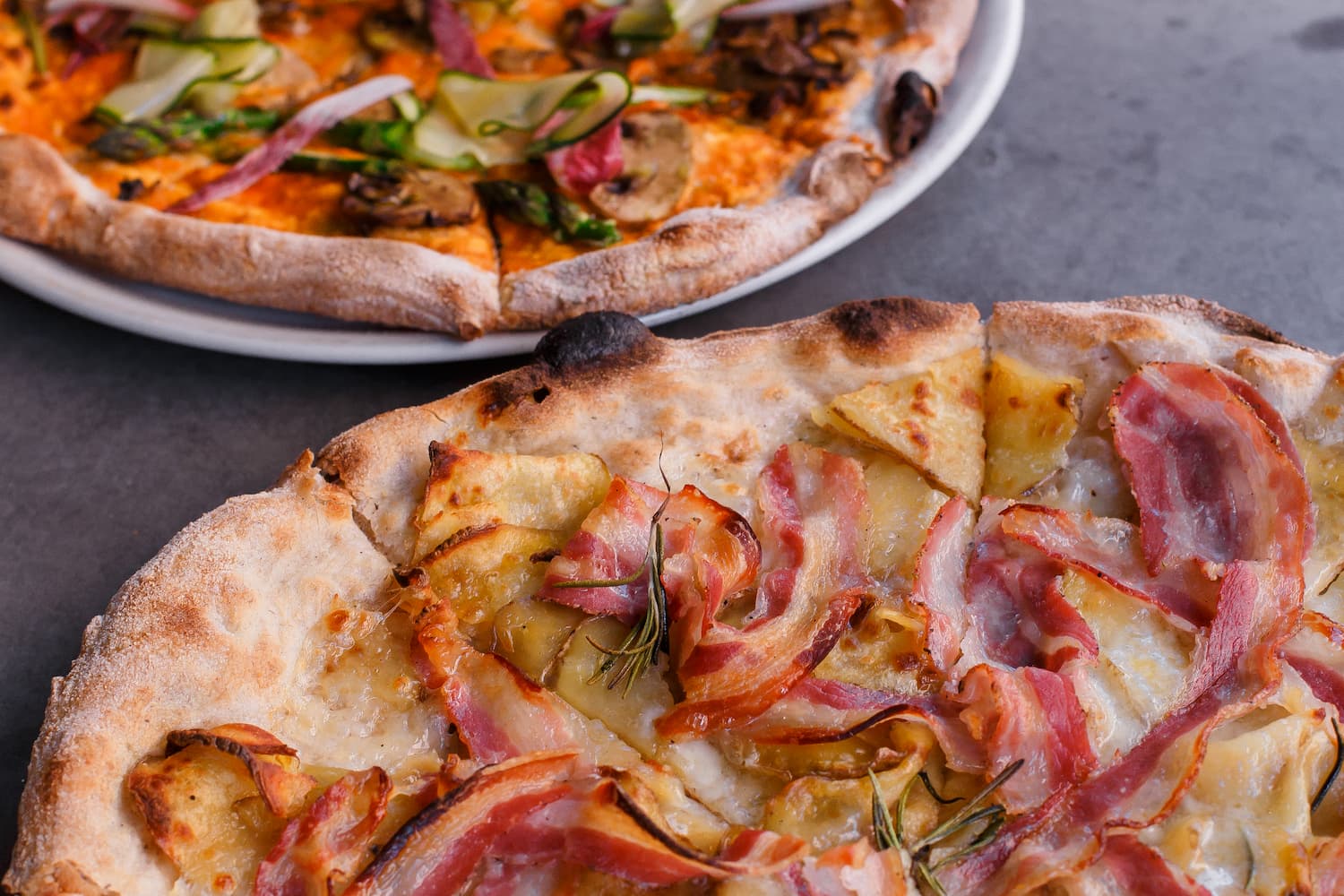
There is a moment that happens quite often at MaMeMi. Someone is reading the menu, tilts their head slightly, and quietly asks their friend, “What is guanciale?” Or they see ‘nduja and have absolutely no idea how to pronounce it, let alone what it tastes like.
I love this moment. It means someone is about to discover something they are going to want for the rest of their life.
Italian food is built on ingredients that have centuries of history behind them. Ingredients that come from specific regions, made by specific people, using methods that have barely changed in hundreds of years. When you understand these ingredients — not just what they are, but where they come from and why they taste the way they do — the food tastes even better. Our broader guide to what defines original Italian pizza goes into the wider philosophy, but here we are zooming in on three specific ingredients.
So let me introduce you to three Italian ingredients that appear on our menu at MaMeMi and that every serious food lover should know. Guanciale, Pecorino Romano, and ‘nduja.
Guanciale
Pronounced: gwan-CHA-leh What it is: Cured pork cheek
Let me start with the one that surprises people most.
When most people outside Italy think of cured pork on a pizza, they think of bacon or pancetta. And if you cannot find guanciale, pancetta is a perfectly respectable substitute. But they are not the same thing, and once you taste guanciale, you will understand immediately why Romans insist on using it.
Guanciale comes from the cheek and jowl of the pig. The word comes from guancia, the Italian word for cheek. The cheek is a muscle that the pig uses constantly, which means it is dense with fat marbled throughout the meat in a very specific way. This is completely different from pancetta, which comes from the belly.
The curing process for guanciale is long and considered an art form in Lazio and Umbria, the central Italian regions where it is produced. The fresh cheek is rubbed with salt, black pepper, and sometimes herbs, then hung to cure for several weeks, sometimes longer. During this time the fat matures and develops a depth of flavor that is almost impossible to describe without tasting it.
When guanciale hits a hot pan, something magical happens. The fat renders slowly, becoming silky and almost liquefied, releasing an intense, savory, porky perfume that fills the kitchen. The meat itself becomes slightly crispy on the outside while staying tender inside. The rendered fat is not discarded. It becomes the base of the dish, carrying flavor into everything it touches.
This is why guanciale is irreplaceable in the great Roman pasta dishes. Carbonara, Amatriciana, Gricia. These dishes are built on guanciale’s rendered fat as much as on any other ingredient. Substitute bacon, which is smoked, and you change the flavor profile completely. Substitute pancetta, and the dish is good but not the same. Only guanciale gives you that specific combination of richness, depth, and delicacy.
At MaMeMi, we use guanciale on our Amatriciana pizza. Tomato sauce, guanciale, Pecorino Romano, black pepper. It is one of our most beloved pizzas in Copenhagen because the combination is exactly right. The fat from the guanciale enriches the tomato sauce in a way no other meat can replicate.
Why it matters on pizza: Guanciale fat renders differently from other pork products. It melts into the pizza during baking, enriching everything around it. The slightly crispy pieces on top give you bursts of intense, savory flavor that bacon simply cannot match. You can read more about traditional Italian pizza toppings you should try to understand where guanciale sits in the wider Italian topping tradition.
Pecorino Romano
Pronounced: peh-koh-REE-noh roh-MAH-noh What it is: Aged sheep’s milk cheese from Lazio and Sardinia
If you grew up eating Italian-American food, you probably know Parmesan. It goes on everything. Pasta, pizza, salads, soup.
In Rome, we use Pecorino Romano. And these two cheeses are nothing alike.
The name tells you everything you need to know. Pecorino comes from pecora, the Italian word for sheep. Romano tells you it originates from the Roman tradition, though today most Pecorino Romano is actually produced in Sardinia, where the milk is considered ideal for this style of cheese.
Pecorino Romano has been made in the Lazio region for over two thousand years. Roman soldiers were apparently given a daily ration of it. It is one of the oldest cheeses in the world still produced using methods that have remained fundamentally unchanged.
The flavor is sharp, salty, and intense. Much more so than Parmesan. It has a slightly tangy quality that comes from the sheep’s milk and the long aging process, which runs from a minimum of five months to over a year for the most aged versions. The texture is hard and granular, perfect for grating.
This intensity is exactly why it works so well in Roman cooking. The great Roman pasta sauces are simple dishes with very few ingredients. Guanciale, pepper, maybe tomato. In this context you need a cheese that can hold its own and contribute real character. Pecorino Romano does this perfectly. Parmesan, which is milder and nuttier, gets lost in these preparations. This is one of the reasons Roman food is so distinct — see our guide to Roman vs Neapolitan pizza for the wider comparison.
There is a debate among Romans about whether carbonara should use Pecorino Romano or Parmesan. Some traditionalists insist on pure Pecorino. Others use a blend. What nobody in Rome argues is that Pecorino Romano belongs in the dish. It is non-negotiable.
At MaMeMi, Pecorino Romano appears on our Amatriciana pizza and our pizza Cacio e Pepe, where it is the star ingredient alongside black pepper. When Pecorino Romano melts over a hot pizza, it forms a slightly golden, intensely savory crust that is one of the great pleasures of Italian food.
Why it matters on pizza: Pecorino Romano has a much higher melting point than many cheeses, which means it holds its shape and develops beautiful golden spots during baking rather than becoming a uniform melted pool. Its saltiness and sharpness mean you need less of it, and each bite carries real punch.
‘Nduja
Pronounced: en-DOO-yah What it is: Spreadable spicy pork salami from Calabria
Of the three ingredients in this blog, ‘nduja is the one that has exploded in popularity internationally over the past few years. Food media has been obsessing over it, chefs around the world are adding it to everything, and if you have not tried it yet, you are in for a revelation.
‘Nduja comes from Calabria, the toe of the Italian boot, the southernmost tip of mainland Italy. Calabria is a region with a long history of poverty and necessity, where people became incredibly creative with pork because the entire animal had to be used and nothing could be wasted. ‘Nduja was born from this creativity.
It is made from pork shoulder, belly, and tripe, combined with a generous amount of Calabrian chili peppers, which are some of the spiciest and most aromatic in Italy, then cured and fermented. The result is unlike any other salami you have ever tried. It is not sliceable. It is spreadable, almost like a very thick, spicy pâté.
The town of Spilinga in Calabria is considered the birthplace of authentic ‘nduja. The local climate and the specific Calabrian chilies used in production give Spilinga’s ‘nduja a character that is impossible to fully replicate elsewhere.
What makes ‘nduja remarkable is what happens when it cooks. Most salami is eaten cold or at most slightly warmed. ‘Nduja melts. When heat hits it, the fat renders, the chili oils are released, and it transforms into a deeply savory, smoky, spicy liquid that coats and enriches everything around it. A small spoonful can transform an entire dish. If you want to understand the baking technique that lets this happen properly, our blog on how pizza is cooked in Italy explains the traditional oven work.
On pizza, ‘nduja is extraordinary. It melts into the tomato sauce during baking, infusing every bite with warmth and depth. The fat pools slightly and creates little pockets of intense flavor across the pizza surface. It is one of those ingredients where a small amount does a tremendous amount of work.
The heat level is real but not aggressive. ‘Nduja is spicy the way good food should be spicy, where the heat builds slowly and is inseparable from the flavor rather than just burning your mouth. After you eat something with ‘nduja, you understand why Calabrians have been making it for centuries.
‘Nduja has become so popular internationally that you can now find it in good supermarkets and delis across Europe. This is partly because of social media, where ‘nduja pasta videos consistently go viral, and partly because chefs have been championing it for years as one of Italy’s most versatile and underappreciated ingredients.
At MaMeMi, ‘nduja appears seasonally on our menu when we feel it is right for the other ingredients we are using. It pairs beautifully with our thin, crispy Roman-style base, which can carry bold flavors without being overwhelmed — a hallmark of our authentic Italian pizza approach.
Why it matters on pizza: ‘Nduja melts and distributes itself across the pizza during baking, creating flavor in every bite rather than just where the topping sits. The fat it releases enriches the tomato sauce. The chili heat warms the whole pizza without making it one-dimensionally spicy.
Why These Three Ingredients Together
Now that you know what each one is, let me tell you why these three specific ingredients appear together on Italian menus so often.
It is not a coincidence. It is a conversation between three products that were all developed in the same culinary culture, all built on the same principles of using high-quality pork, salt, time, and regional expertise. Our broader piece on what are traditional Italian pizza toppings puts them in the wider context of Italian topping traditions.
Guanciale brings fat and depth. Pecorino Romano brings sharpness and salt. ‘Nduja brings heat and complexity. Together, they create a flavor profile that is intensely Italian in the best possible way. Bold but not aggressive. Rich but balanced. Simple in theory but extraordinary in practice.
At MaMeMi, we use these ingredients because we believe in the Italian philosophy of letting great ingredients speak for themselves. Our Roman-style pizza base, thin and crispy with that perfect scrocchiarella crunch, is the ideal foundation for flavors this bold. The crust does not compete with the toppings. It supports them.
A Word About Sourcing
One thing I always tell people is that ingredients like these are only as good as where they come from.
Mass-produced guanciale from a factory is a completely different product from guanciale made by a small producer in Lazio who has been doing it the same way for three generations. The same is true for Pecorino Romano, which is actually a protected designation of origin product in the EU, meaning it can only be produced in specific areas using specific methods.
At MaMeMi, we work hard to source the best versions of these ingredients we can find. Not the cheapest. Not the easiest to order online. The ones that taste the way they are supposed to taste. You can read more about our story and how we source if you want to understand where this comes from.
When you come to MaMeMi and order something with guanciale, Pecorino Romano, or ‘nduja, you are getting these ingredients as they are meant to be. That is a promise we take seriously.
Pairing These Flavors With Wine
Ingredients this bold deserve a wine that can meet them. Guanciale and Pecorino Romano thrive with a medium-bodied red — something with structure but not overpowering tannins. ‘Nduja works beautifully with slightly chilled, low-tannin reds that cool the palate between bites.
At our Italian wine bar in Copenhagen, Danilo has curated over 1000 natural Italian wines, and he takes real pleasure in matching them to what you are eating. For more on the philosophy, see our guide to which wine goes best with your pizza.
Come Try Them in Vesterbro
The best way to understand these ingredients is to taste them on a properly made pizza.
Come visit us at Mysundegade 28 in Vesterbro. Order our Amatriciana and let guanciale and Pecorino Romano show you what Roman cooking is built on. Ask Danilo what wine he recommends with it. He has an opinion, and it will be a good one.
Weekend lunch is open every Saturday and Sunday from 12:00 if you want to experience these flavors in the afternoon with a glass of natural wine and no particular rush. See the full menu online before you come.
We are here from Wednesday to Sunday. Walk in or book your table online. See you soon.
Francesco
MaMeMi serves authentic Roman-style pizza in Vesterbro, Copenhagen using traditional Italian ingredients sourced with care. Our menu features guanciale, Pecorino Romano, ‘nduja, and other ingredients that define Roman and Italian cooking. Over 1000 natural wines curated by our sommelier Danilo. Weekend lunch Saturdays and Sundays from 12:00. Mysundegade 28, Vesterbro. Book your table.